
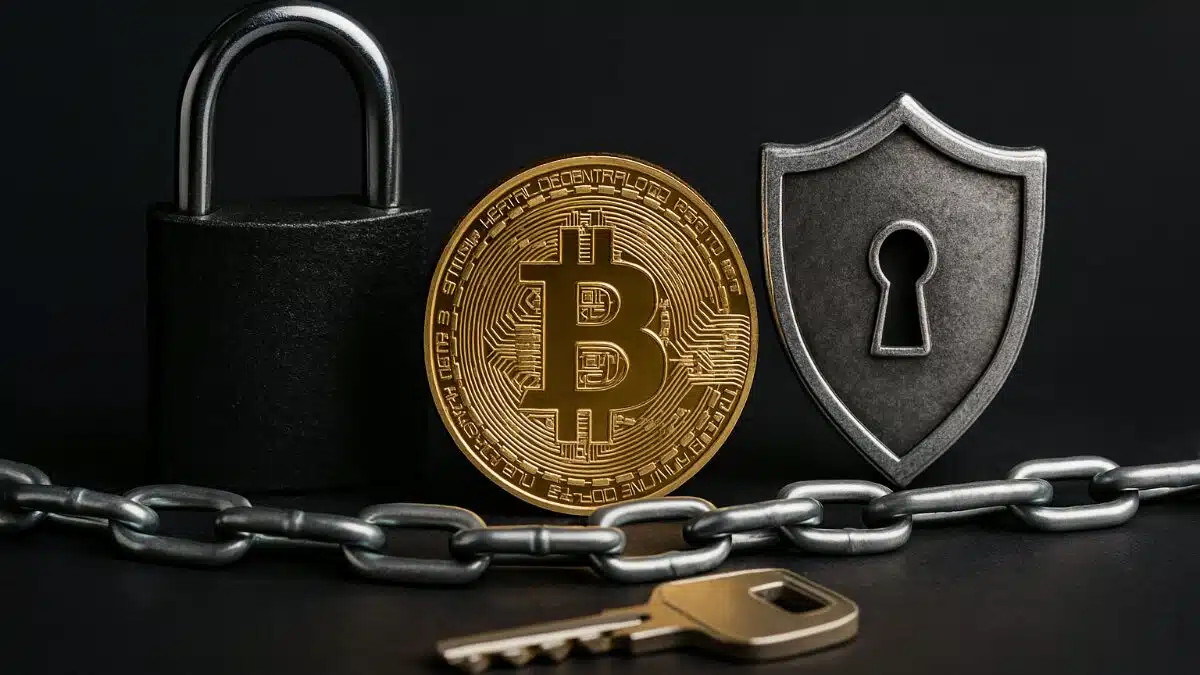
The crypto wallet, a term frequently used in the world of digital assets, is much more than just a wallet. It represents the fundamental pillar of your cryptocurrency security. Without a proper crypto wallet, your digital assets, whether Bitcoin, Ethereum, or Solana, remain vulnerable. It is the guardian of your private keys, an essential element for accessing your funds on the blockchain.
Choosing the right digital wallet is a crucial step for any investor, from beginner to expert. This decision directly impacts the protection of your capital and your ability to interact with the world of decentralized finance (DeFi) and NFTs. Given the diversity of options available, it’s essential to understand the mechanisms, advantages, and disadvantages of each type of crypto wallet. Find everything you need to know in our complete crypto wallet guide.
Table of Contents
What is a crypto wallet and why is it essential?
A crypto wallet is an application, hardware device, or service that stores the public and private keys needed to access your cryptocurrencies . Contrary to popular belief, the digital wallet doesn’t physically contain your assets. In reality, your cryptocurrencies are recorded on the blockchain , and your crypto wallet simply allows you to interact with them. The private key is the secret password that proves your ownership of the funds and authorizes transactions. The public key, on the other hand, is comparable to a bank account number; you share it to receive funds.
The importance of a crypto wallet lies in the complete control it gives you over your assets. On a centralized exchange platform, you entrust your funds to a third party. In contrast, with your own digital wallet, you are the sole decision-maker. This autonomy is one of the founding principles of blockchain and cryptocurrencies . It is a major responsibility, because losing your private key means the irretrievable loss of your funds.
The different types of crypto wallets
The crypto wallet market offers a multitude of solutions, each tailored to specific needs in terms of security, convenience, and cost. Understanding these distinctions is essential for making an informed choice.
Hot Wallets
Hot wallets are digital wallets connected to the internet. They come in the form of mobile apps, desktop software, or browser extensions. Their main advantage lies in their ease of use and accessibility. Ideal for frequent transactions and small amounts, these crypto wallets allow for the rapid sending, receiving, and exchange of cryptocurrencies . However, their constant connection to the network makes them more vulnerable to hacking and cyberattacks. Popular examples include Trust Wallet and MetaMask, often used to interact with DeFi applications and NFTs.
Cold Wallets
Unlike hot wallets , cold wallets are offline storage solutions. They keep your private keys disconnected from the internet, offering maximum protection against online threats. These devices are preferred for the long-term storage of large amounts of cryptocurrency . While less convenient for everyday transactions, their security is unmatched. Hardware cold wallets are the most common and recommended form of this type of digital wallet.
Hardware Wallets: the best wallets to protect your digital assets
Hardware wallets are physical devices that resemble USB drives. They store your private keys on a secure chip, isolated from any internet connection. Each transaction must be physically validated on the device, making hacking extremely difficult. Brands like Ledger and Trezor have become leaders in this field. These crypto wallets represent the best compromise between security and accessibility for serious investors, effectively protecting Bitcoin, Ethereum, Solana, and other altcoins.
How to choose the right crypto wallet in 2026?
Choosing a crypto wallet should not be taken lightly. Several factors must be meticulously evaluated to ensure your digital wallet securely meets your needs.
The number one priority in crypto is security.
Security is paramount. A crypto wallet must offer robust protection for your private keys. Hardware wallets excel in this area thanks to their offline isolation. For hot wallets, look for features such as two-factor authentication (2FA), data encryption, and regular security audits. Check the provider’s reputation and its history of security breaches. Never forget that you are solely responsible for safeguarding your recovery phrase (seed phrase).
Ease of use: an intuitive interface for everyone
Ease of use is crucial, especially for beginners. A digital wallet with an intuitive interface will make the experience more enjoyable and reduce the risk of errors. Clear steps for sending, receiving, and swapping cryptocurrencies are essential. Some crypto wallets are designed to be simple, while others offer advanced features that can be more complex to master. Striking the right balance between user-friendliness and security is key.
Check which cryptocurrencies are supported.
Compatibility with the cryptocurrencies you own or plan to acquire is a crucial factor. Some crypto wallets are specialized (like a pure Bitcoin wallet ), while others are multi-chain and support hundreds or even thousands of digital assets, including Bitcoin, Ethereum, Solana, XRP, and more. Make sure your digital wallet supports all the important cryptocurrencies in your portfolio. This includes not only traditional tokens but also NFTs and interactions with dApps.
Understanding the hidden costs and fees of blockchain
The fees associated with using a crypto wallet can vary. While opening a hot wallet is often free, transactions on the blockchain incur network fees ( gas fees ) that are inherent to the blockchain’s operation . Hardware wallets, on the other hand, have an initial purchase cost. It’s important to consider all these potential costs. Swap or conversion fees may also apply to certain transactions. A good digital wallet should offer complete transparency regarding these costs.
The best crypto wallets in 2026
Faced with an abundance of options, some crypto wallets stand out for their reputation, security, and features. Here is a selection of the most relevant ones at the end of 2024.
Ledger Nano X
The Ledger Nano X is a leading hardware wallet , praised for its bank-grade security. It allows you to store and manage a wide range of cryptocurrencies offline, from Bitcoin to Ethereum and Solana. Its touchscreen and Bluetooth® connectivity offer a seamless user experience, especially through the Ledger Live app. While it represents a significant initial investment, it’s an essential choice for investors looking to protect substantial sums of money. Its Secure Element chip guarantees maximum isolation of private keys, a major advantage.
Trezor Model One
The Trezor Model One is another highly regarded hardware wallet, known for its robustness and ease of use. It offers top-notch security for storing a wide range of cryptocurrencies . Its simple interface makes it accessible to beginners. Less expensive than the Ledger Nano X, it’s an excellent option for those seeking reliable security without breaking the bank. It’s a crypto wallet with a proven track record.
Trust Wallet
Trust Wallet is a mobile hot wallet developed by Binance, offering great versatility. It supports over 100 blockchains and millions of assets, including Bitcoin, Ethereum, and Solana. Its integrated dApp browser facilitates access to DeFi and NFTs. It is appreciated for its simplicity and convenience, allowing users to buy, sell, and swap cryptocurrencies directly from the app. However, like any hot wallet, it requires heightened security awareness, and it is often recommended to pair it with a hardware wallet for large amounts.
MetaMask
MetaMask is an essential browser extension (and mobile app) for anyone wanting to explore Web3. It’s the quintessential Ethereum wallet, allowing interaction with thousands of dApps on the Ethereum blockchain and other EVM-compatible networks. Ideal for managing your ETH and NFTs, it’s crucial for staking , yield farming , and airdrops . Its popularity makes it a prime target, so it’s vital to use it with caution and fully understand the permissions you grant to decentralized applications.
How to configure and secure your crypto wallet
Setting up a crypto wallet is a crucial step for the security of your assets. Here are the key steps.
First, choose your wallet type. For a hardware wallet like Ledger or Trezor, you’ll need to purchase and install it following the manufacturer’s instructions. For a hot wallet, download the official app or extension.
Secondly, generate your recovery phrase ( seed phrase or mnemonic phrase). This is a sequence of 12 or 24 words that serves as the ultimate backup for your digital wallet. Write it down and keep it in a safe, offline location, away from prying eyes and disasters. Never share it with anyone and do not store it on any connected device.
Third, secure access to your crypto wallet. Create a strong password and enable two-factor authentication (2FA) if available. For hardware wallets, a PIN is required each time you use them.
Finally, send your cryptocurrency. Start with a small amount to familiarize yourself with the process. Always double-check the destination address before confirming a transaction. An incorrect address can result in the irreversible loss of your funds on the blockchain .
Practical tips for protecting your cryptocurrencies
Protecting your cryptocurrencies requires constant vigilance. Zero risk doesn’t exist, but rigorous practices significantly limit the threats.
Your seed phrase must remain out of reach of the internet!
Backing up your recovery phrase is the golden rule. Keep it safe, away from your physical crypto wallet or any connected device. A good practice is to have several secure copies.
Be extremely careful of phishing
Scammers often try to obtain your private keys or recovery phrase through fake websites, emails, or messages. Always verify the authenticity of sources before clicking a link or entering sensitive information. Legitimate projects, such as Ledger or MetaMask, will never ask for your recovery phrase.
Use up-to-date antivirus and anti-malware software on your devices
This helps protect your hot wallet from Trojans and other malware that could steal your information. A hardware wallet reduces this risk because your keys remain isolated.
Beware of exorbitant crypto gains!
Beware of promises of unrealistic returns. If an opportunity seems too good to be true, it probably is. Many Ponzi schemes and scams prey on the lure of quick profits. Do your own research ( DYOR – Do Your Own Research ) before investing or connecting your digital wallet to a new DeFi platform.
Diversify your risk by not putting all your cryptocurrencies in a single crypto wallet
Use a cold wallet for the majority of your funds and a hot wallet for smaller amounts intended for everyday transactions or DeFi experimentation. This “vault” strategy is essential.
Stay informed about news and vulnerabilities
The crypto ecosystem is evolving rapidly. Following trusted experts and announcements from your crypto wallet developers will help you anticipate threats and apply necessary updates.